
From the Pages: Empathy as a Performance Driver
(EI & Relationship Mastery Newsletter – Season 4, Article 3)
A Blessed Day to all.
Welcome back to Season 4 of “EI & Relationship Mastery.”
We started this season by redefining authority (it’s conviction, not volume). Then, we explored the mechanics of that authority through Strategic Silence.
Today, we move to the “heart” of the matter—quite literally.
There is a persistent myth in the business world that “empathy” is a soft skill. We treat it like a garnish—nice to have if you have time, but irrelevant to the main course of profit, efficiency, and results. We think of empathy as just “being nice.”
This is a fundamental misunderstanding.
In my book, “Quiet Power: Leading with Impact,” I argue that for the introverted leader, empathy is not a garnish. It is the engine. It is the cold, hard mechanism by which high performance is unlocked.
On second page of chapter 4, dedicated to Relationship Mastery, I wrote:
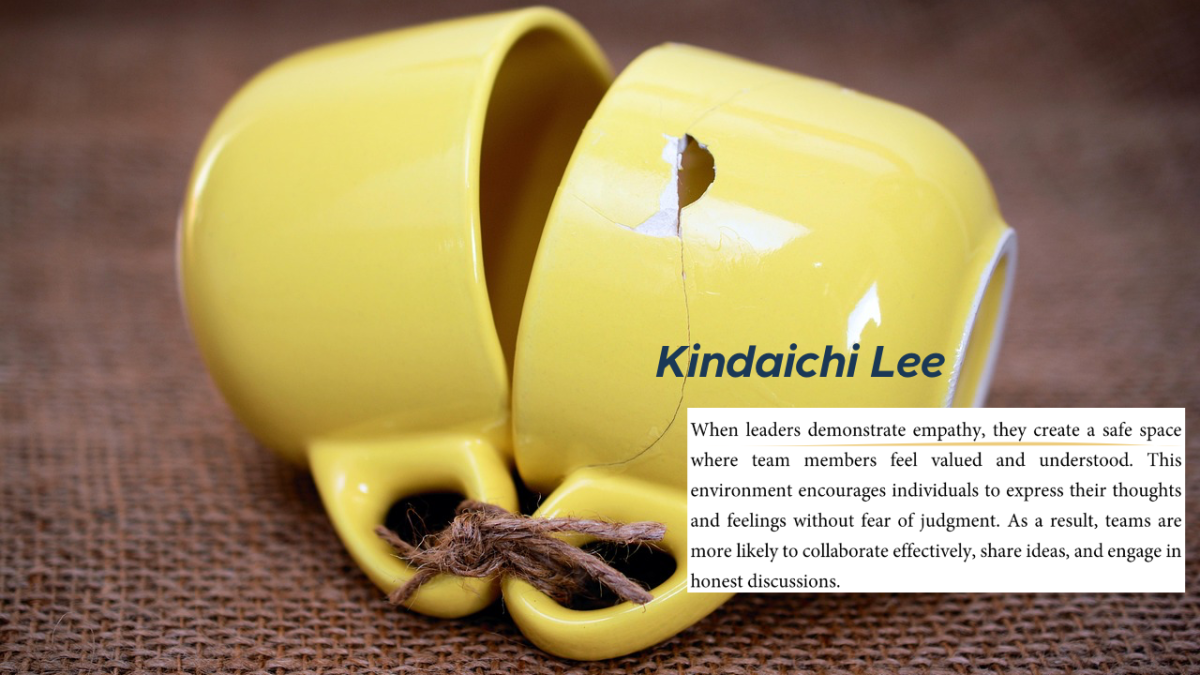
“When leaders demonstrate empathy, they create a safe space where team members feel valued and understood. This environment encourages individuals to express their thoughts and feelings without fear of judgment. As a result, teams are more likely to collaborate effectively…”
Today, we are going to prove this. We are going to move beyond the “warm and fuzzy” and look at the “hard metrics” of empathy.
I want to share the story of a leader who inherited a team that was statistically the worst in the company—a toxic, disengaged, failing unit—and used a specific framework (the HEART framework from Chapter 4 of the book) to turn it into the top-performing division within 9 months.
The Cost of the “Fear Factory”
Before we get to the solution, let’s look at the problem.
When a team lacks empathy and trust, it runs on fear. I call these environments “Fear Factories.” In a Fear Factory, the primary goal of every employee is self-preservation.
- They hide mistakes (leading to bigger failures later).
- They hoard information (to make themselves indispensable).
- They do the bare minimum (to avoid criticism).
This is not just a “culture” problem; it is a math problem. A team running on fear is operating at about 40% cognitive capacity. Their prefrontal cortex (the part of the brain responsible for strategy and innovation) is inhibited because their amygdala (the threat center) is constantly firing.
You cannot bully a team into high performance. You can only bully them into compliance. And compliance is the enemy of excellence.
The Case Study: The “Unfixable” Team
Let me introduce you to “Sarah” (name changed). Sarah was a quiet, introverted senior manager who was promoted to lead the “Client Services” division of a major financial firm.
This division was notorious. It had the highest turnover rate in the company (35%). Its customer satisfaction (CSAT) score was a dismal 2.8 out of 5. The previous manager was a classic “Action Hero”—loud, demanding, and focused entirely on KPIs. He yelled about numbers every morning, and the numbers kept getting worse.
When Sarah took over, the team was cynical. They expected another drill sergeant.
Sarah didn’t yell. In her first week, she didn’t even mention the KPIs.
“I know the numbers are bad,” she told me in our first coaching session. “But the numbers are a symptom. The disease is that they hate working here. They feel like cogs in a machine.”
Sarah decided to deploy the HEART Framework—a tool detailed in Chapter 4 of Quiet Power to operationalize trust and connection.
The HEART Framework in Action
The HEART framework stands for: Honesty, Empathy, Accountability, Respect, Transparency. Sarah applied this methodically, treating it as a strategic turnaround plan.
1. H – Honesty (Truth in Interactions)
The previous manager often sugar-coated bad news or made promises he couldn’t keep. Sarah started with radical truth-telling, even when it was difficult.
- The Action: In her first meeting, she didn’t promise a quick fix. She said, “I know you’ve been promised changes before that didn’t happen. I won’t promise you anything I can’t deliver. The truth is, we are in a deep hole, and the budget is frozen for Q1. It’s going to be hard.”
- The Result: The team was shocked. But for the first time, they believed a manager because she respected them enough to tell the hard truth.
2. E – Empathise (Sharing Feelings)
Sarah didn’t just look at data; she connected with their experience.
- The Action: She held “listening sessions” where her only job was to understand. When a team member expressed frustration about the crashing software, she didn’t defend the company. She said, “It must be incredibly exhausting to try to do your best work when your tools are fighting you. I feel that frustration too.”
- The Result: By validating their feelings rather than dismissing them, she fostered a connection. The “us vs. management” wall began to crack.
3. A – Accountability (Owning Actions)
In the past, when things went wrong, the boss blamed the team. Sarah flipped the script.
- The Action: Two months in, Sarah made a scheduling error that caused a coverage gap. Instead of hiding it, she stood up in the team huddle. “I messed up the schedule this week. That was my failure, and I know it caused stress for you. I am sorry, and here is how I will prevent it next time.”
- The Result: By taking responsibility for her own actions, she set a new standard. It became safe for others to admit mistakes and fix them, rather than hiding them.
4. R – Respect (Valuing Perspectives)
The old regime micro-managed. Sarah used her introverted preference for observation to identify the team’s hidden strengths.
- The Action: She realized the junior agents often had better solutions for client issues than the seniors. She started a “Solutions Board” where anyone, regardless of rank, could post a fix. She implemented ideas from the most junior staff.
- The Result: Engagement soared. People felt their contributions were valued, not just their obedience.
5. T – Transparency (Open Reasoning)
Decisions used to happen behind closed doors. Sarah opened the books.
- The Action: When she had to deny a leave request or change a process, she explained the why. “We are changing this workflow not because I say so, but because the data shows it saves us 2 hours a week. Here is the data.”
- The Result: The rumor mill stopped. The team understood the “why” behind the “what,” leading to faster buy-in.
The Turnaround: The Hard Numbers
So, did all this “soft” stuff work?
- Month 1-3: The turnover stopped. Stabilisation.
- Month 6: The culture of Accountability meant errors were caught early. Transparency meant less time wasted on rumours.
- Month 9: Turnover: Dropped from 35% to 4%. CSAT Score: Rose from 2.8 to 4.2 (The highest in the division). Revenue: Up 18% because clients felt the difference in service.
Sarah didn’t yell at a single person. She didn’t institute a stricter attendance policy. She didn’t offer massive bonuses.
She used the HEART Framework. She treated her team with Honesty, Empathy, Accountability, Respect, and Transparency. She built a relationship with them, and they, in turn, built the business for her.
How to Operationalise HEART (Your Application)
You don’t need a broken team to use this. You can use the HEART framework today to boost your current team’s performance.
1. The Honesty Audit
Are you sugar-coating things to avoid conflict? Try being 10% more direct this week. “I value your work, which is why I need to be honest that this report isn’t up to your usual standard.”
2. The Accountability Mirror
The next time a small mistake happens, own your part in it first. “I think I wasn’t clear in my instructions.” Watch how quickly your team relaxes and steps up to own their part too.
3. The Transparency Explanation
For your next decision, don’t just announce the outcome. Spend 5 minutes explaining the variables you weighed and the reasoning behind the choice. Treat your team like adults who can handle the context.
The Introvert’s Advantage
Introverts are naturally wired for this.
- We think before we speak (aiding Honesty and Transparency).
- We listen deeply (aiding Empathy and Respect).
- We are often reflective (aiding Accountability).
You do not need to be the loudest cheerleader to be the best motivator. You just need to be the person who makes your team feel safe, valued, and clear on the mission.
As in Chapter 4 of my book, the concept is:
“True influence is not born of manipulation, but of connection.”
Until next week, lead with HEART.
Kindaichi Lee, Your Transformative Storyteller 🎬