
From the Pages: Relationship Building (Depth over Breadth)
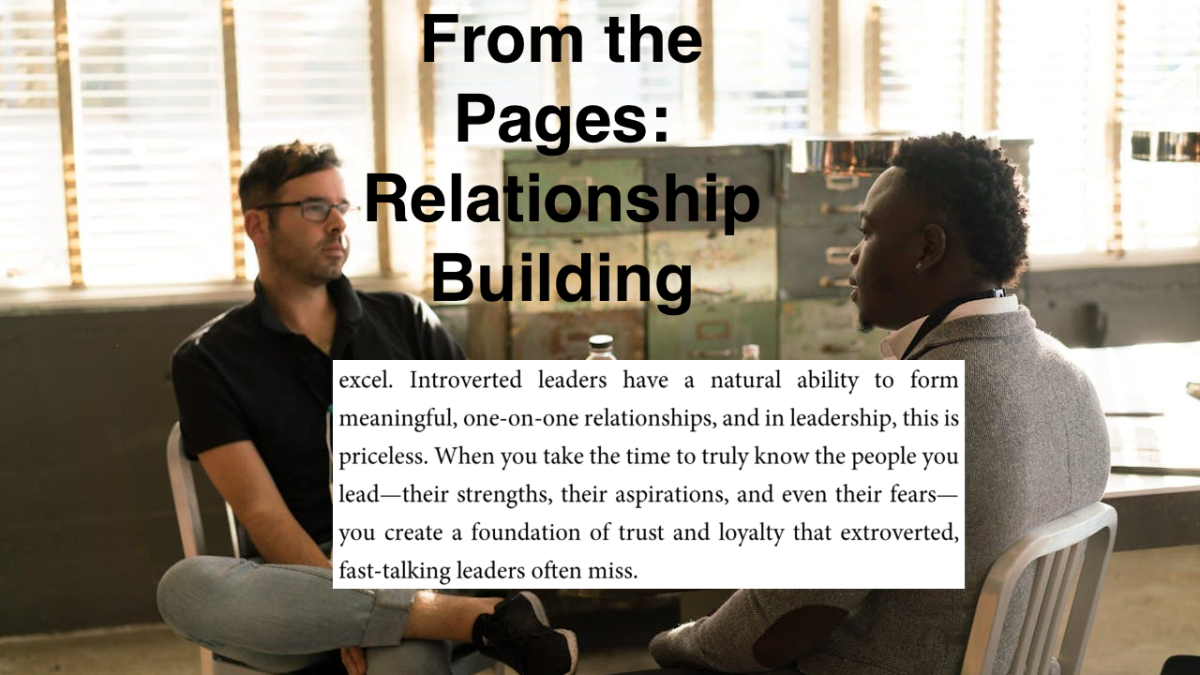
(EI & Relationship Mastery Newsletter – Season 4, Article 9)
Good morning from Kuala Lumpur.
Welcome back to Season 4 of “EI & Relationship Mastery.”
For the past few weeks, we have been exploring how to strip away the “Extrovert Mask” and lead authentically. We’ve talked about protecting your energy, deploying strategic silence, and sharing the spotlight.
Today, we are going to tackle one of the most misunderstood areas of leadership and corporate culture: Relationship Building.
If you read modern business advice, you might believe that building a great team culture requires you to be a cruise ship director. We are told to host weekly “Happy Hours,” organise team-building retreats, plan pizza Fridays, and be the energetic “life of the party” who effortlessly mingles with fifty people in a crowded room.
For the extroverted leader, this sounds like a great Friday.
For the introverted leader, this sounds like a threat to our nervous system.
We often feel guilty about this. We think, “If I don’t go to the happy hour, my team will think I don’t care about them. I’ll lose their loyalty.”
But loyalty is not forged over lukewarm pizza and forced small talk.
In Chapter 1 of my book, “Quiet Power: Leading with Impact,” we dismantle the myth of the “broad networker.” I wrote:
“Introverted leaders have a natural ability to form meaningful, one-on-one relationships… When you take the time to truly know the people you lead—their strengths, their aspirations, and even their fears—you create a foundation of trust and loyalty that extroverted, fast-talking leaders often miss.”
Today, we are going to explore why Depth over Breadth is the ultimate retention strategy.
I am going to share the story of a leader in a cutthroat, high-turnover industry who notoriously skipped every company social event—yet maintained a 0% employee turnover rate over three years because of his mastery of the one-on-one.
The Illusion of “Culture” and The Breadth Trap
Let’s define the battlefield.
Extroverts generally excel at Breadth. They can walk into a room of fifty strangers and leave with fifty new LinkedIn connections. They are fantastic at distributing their energy widely across a large surface area.
Introverts generally excel at Depth. We find large groups exhausting, but put us in a quiet room with one other person, and we can drill down to the core of their motivations, fears, and dreams faster than anyone else.
The corporate world often measures culture by Breadth. “Look how many people came to the mixer!”
But Breadth does not equal Trust.
Breadth equals Acquaintance.
When a crisis hits, or when a recruiter calls your best employee offering a 20% pay bump, an acquaintance will leave. A deep connection will stay.
The “Breadth Trap” is believing that doing a little bit for a lot of people builds loyalty. In reality, loyalty is built by making individuals feel completely, undeniably seen.
The Case Study: The Director Who Skipped Happy Hour
Let me introduce you to “David” (name changed).
David was a Creative Director at a fast-paced advertising agency. Advertising is notoriously high-pressure and high-turnover. Agencies bleed talent constantly.
There was another Director at the agency named “Greg.” Greg was the ultimate “Culture Guy.” He organised the Thirsty Thursday bar crawls. He knew everyone’s name in the 200-person office. He was the loud, fun, fast-talking Gladiolus.
David was the opposite. He was a Map Maker and a Deep Diver. At 5:30 PM, when Greg was rallying the troops for drinks, David packed his bag and went home to his family. He didn’t go to the mixers. He didn’t mingle.
By the standard corporate metric, Greg was a “culture champion” and David was “aloof.”
But the HR data told a completely different story.
Greg’s team had a 40% annual turnover rate. His people loved partying with him, but they didn’t feel safe failing under him. When the work got hard, they quit.
David’s team had a 0% turnover rate for three consecutive years. His designers and copywriters refused to be transferred. When rival agencies tried to poach them with higher salaries, they declined.
Why? Because David had replaced the superficial Breadth of the “Happy Hour” with the profound Depth of the “Coaching One-on-One.”
The “Quiet Power” One-on-One
When David’s team members were asked why they stayed, they never mentioned parties. They mentioned David’s office.
David used his introverted superpower—the ability to focus intensely on one person at a time—to transform his weekly check-ins.
Here is how David’s 1-on-1s differed from the standard corporate meeting:
1. No Status Updates Allowed
Most managers use 1-on-1s to ask, “Where is the XYZ project?”
David banned status updates from these meetings. “Put the project status in an email or on the Slack channel,” he told his team. “This 30 minutes is for you, not the project.”
2. Mapping the Aspirations
In their very first meeting, David didn’t ask about their 5-year plan (a question that invites cliché answers). He used his Empathetic Edge to ask:
“What is the type of work you do here that makes you lose track of time?”
“If you could design your perfect Tuesday at this agency, what would it look like?”
He learned that his junior designer secretly wanted to learn copywriting. He learned that his senior art director was terrified of public speaking but wanted to be a creative lead. He mapped their aspirations.
3. Navigating the Fears
Because David had established a Still-Point—a calm, non-judgmental environment—his team felt safe sharing their fears.
When a major pitch failed, Greg (the extrovert) would take his team out for shots to “forget about it.”
David took his lead designer into his office, closed the door, and asked, “I know that stung. What part of that failure are you blaming yourself for right now?” He helped them process the failure, rather than just masking it with forced fun.
The ROI of Depth
What was the result of this deep, quiet connection?
When the junior designer who wanted to write copy was struggling, David quietly gave her a low-stakes copywriting assignment to practice on. She felt seen.
When the senior art director had to present, David spent an hour privately rehearsing with him, letting him stumble without judgment. He felt supported.
When a recruiter called them, they didn’t just weigh the salary. They weighed the relationship. They thought: “If I go to this new agency, I might get $10k more. But I will lose David. I will lose the one boss who actually knows what I am afraid of and what I want to become.”
They stayed.
David proved that you do not need to be the life of the party to build an unbreakable team culture. You just need to be willing to sit in the quiet with your people and truly listen to them.
How to Apply the “Depth Strategy” This Week
If you are an introverted leader feeling the pressure to “be more social” at scale, I give you permission to stop.
Cancel the mandatory fun. Redirect that energy into Depth. Here is your application strategy for the week:
1. The “Status-Free” Challenge
Take your next round of 1-on-1s and declare them “Status-Free Zones.” Tell your team member: “I’ve read your project updates, we are good there. Today, I just want to know: What is the most frustrating roadblock in your day-to-day right now, and how can I clear it for you?”
2. Ask the “Fear” Question
Trust accelerates when vulnerability is met with safety. Ask a high-performing team member: “You’re doing great work on this launch. But just between us, what’s the one part of this project that secretly makes you nervous?”
Validate that fear. Don’t dismiss it.
3. The Micro-Mentorship Moment
Review the people you lead. Do you actually know what they want to be doing in two years? If you don’t, find out. Then, find one tiny, 10-minute task you can give them this week that aligns with that future goal. It shows them you are actively investing in their trajectory, not just their current output.
The Power of Being Known
Humans have a fundamental, driving need to be understood. We want to be known.
A happy hour might make us feel included for an evening. But a leader who takes the time to map our strengths, acknowledge our fears, and quietly champion our aspirations makes us feel valued for a lifetime.
As an introverted leader, this is your home turf. You are built for depth.
Stop trying to spread yourself thin across the surface. Dive deep. That is where the anchors of loyalty are forged.
“When you take the time to truly know the people you lead… you create a foundation of trust.”
Until next week, lead with depth.
Kindaichi Lee, Your Transformative Storyteller 🎬