
Sustaining the Marathon: The Introvert’s Approach to Long-Term Impact
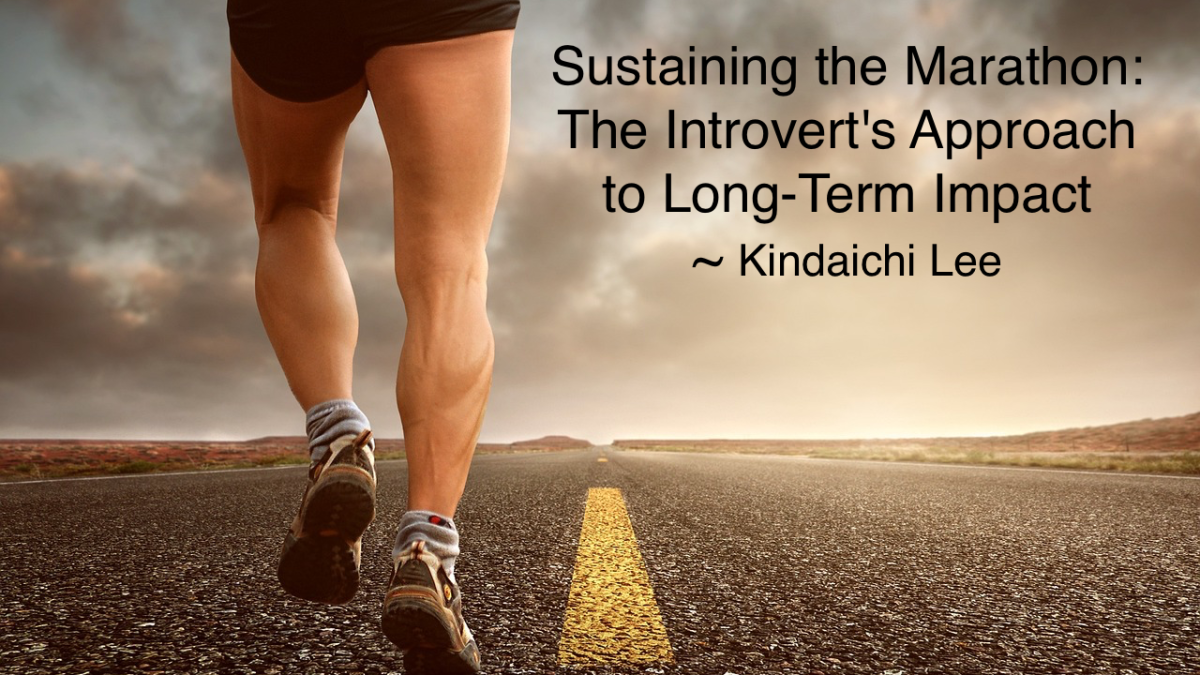
Good afternoon from a humid and wet Kuala Lumpur. Taking my morning stroll, I see the joggers (or runners) from the neighbourhood. Some were like the sprinters—bursts of incredible speed, muscles tense, faces contorted in effort, covering ground rapidly but stopping just as quickly, hands on knees, gasping for air. And then, there are the distance joggers. Their pace is slower, but it is rhythmic. Their faces are calm. They are not running against the clock of the next ten seconds; they are running against the horizon. They are built for the distance.
In our culture, we have an obsession with the sprint. We glorify the “hustle.” We celebrate the overnight success. We reward the leader who pulls the all-nighter to save the project, the “Action Hero” who operates at a constant, frantic 110% capacity. We have designed a professional world that looks like a series of 100-meter dashes, played out back-to-back, forever.
But here is the hard truth that I see in my coaching practice every single day: Leadership is not a sprint. It is a marathon.
And if you try to run a marathon with the energy and strategy of a sprinter, you will not finish. You will burn out. Your team will burn out. Your strategy will collapse under the weight of exhaustion.
For the past six weeks, we have explored the facets of “Quiet Power.” We’ve looked at the Still-Point of Strategy, the Empathetic Edge, the Strength in Serenity, the Depth Charge, the Linguistic Scalpel, and the Curator of Talent.
Today, we look at what binds all these together: Endurance.
This week, we explore how the reflective, deliberate, and quiet nature of introverts is not a liability in a fast-paced world, but the ultimate asset for long-term sustainability. We will delve into how Quiet Power enables sustained effort, strategic pacing, and a focus on long-term, meaningful impact over the seductive but fleeting wins of the sprint.
The Cult of the “Sugar Rush” Win
Why do so many organisations run on sprint energy? Because it feels good. It’s a dopamine hit. The “Action Hero” leader loves the adrenaline of the crisis. Fixing the immediate problem, landing the quick sale, putting out the fire—these provide instant gratification. It’s the leadership equivalent of a sugar rush: high energy, high buzz, followed inevitably by a crash.
The problem is that real, transformative impact—the kind that changes cultures, builds legacies, and solves complex problems—rarely happens in a sprint.
- Culture change takes years, not weeks.
- Building deep trust takes consistency, not intensity.
- Developing talent (as we discussed with the Curator) is a slow, organic process.
When we force introverted leaders to act like extroverted sprinters—to be constantly “on,” constantly visible, constantly reacting—we are asking them to drain their batteries without recharging. We are sacrificing their long-term brilliance for short-term noise.
But when we allow the introvert to lead from their natural strengths, we unlock a different kind of energy. We unlock the energy of the Marathoner.
The Introvert’s Endurance Engine
Introverts are often misunderstood as having “low energy.” This is false. Introverts have a different type of engine. While the extrovert runs on solar power (recharging through external interaction), the introvert runs on a deep-cycle battery (recharging through internal reflection).
This internal engine is specifically designed for the marathon of leadership. Here’s why:
1. Conservation of Energy (The deliberate “No”)
A marathon runner knows they cannot sprint up every hill. They must conserve energy for the long haul. The introverted leader, protective of their energy, is naturally more discerning. They are the Map Maker who says “No” to the distraction so they can say “Yes” to the destination. They don’t jump on every bandwagon. They don’t attend every meeting. They don’t react to every email. This isn’t laziness; it’s strategic conservation. By refusing to burn energy on the trivial, they ensure they have a full tank for the critical.
2. Intrinsic Motivation (The Deep Root)
Sprinters often run for the applause at the finish line. But in a marathon, there are long, lonely miles where no one is clapping. You have to keep running simply because you believe in the run. Introverts tend to be driven more by intrinsic motivation—purpose, meaning, craft, and curiosity (The Deep Diver)—than by extrinsic rewards like public praise. This “deep root” system allows them to keep going when the external validation dries up, or when the project hits the “messy middle” where the glamour is gone and only the hard work remains.
3. The Power of Pacing (The Rhythm of Reflection)
The “Action Hero” operates in fits and starts—crisis, collapse, crisis, collapse. The Quiet Leader operates with rhythm. Their habit of regular reflection (The Still-Point) creates a cadence. They act, they reflect, they adjust, they act again. This rhythm is sustainable. It prevents the accumulation of unaddressed stress. It allows for course correction before a small error becomes a disaster. It is the steady heartbeat of a healthy organization.
Narratives of the Long Haul
The true test of a leader is not where they are at the start of the race, but where they (and their team) are at mile 20.
Story 1: The Hare and the Tortoise (Corporate Edition)
I worked with a tech startup that had two co-founders. Let’s call them Mark and Sarah.
Mark was the Sprinter. He was the face of the company—charismatic, high-energy, always chasing the next shiny object. He drove the team hard. “Sleep is for the weak!” was his unofficial motto. In the first year, they grew massively. It was exciting. It was a sugar rush. But by year two, the cracks appeared. The turnover rate skyrocketed. The code base was a mess of “quick fixes.” Mark himself was exhausted, making erratic decisions, bouncing from one strategy to another. The company was fast, but it was fragile.
Sarah was the Marathoner. She was an introvert, the CTO. While Mark was sprinting, she was building. She was the Gardener, tending to the engineering culture. She was the Weaver, connecting the systems. She refused to rush the core architecture. She insisted on “quiet weeks” where no meetings were allowed so deep work could happen. She didn’t seek the press; she sought stability.
When the market turned and the “hype cycle” ended, Mark crashed. He didn’t have the stamina for the grind of a downturn. He stepped down. Sarah stepped up. She didn’t change her pace. She kept her steady, rhythmic leadership. She focused on the core product, the core team, and the long-term value. She didn’t offer fireworks; she offered certainty.
Five years later, the company is not just still around; it is the industry leader. It didn’t get there by sprinting. It got there because Sarah built an engine that could run forever. Her Quiet Power was the difference between a flash-in-the-pan and a legacy.
Story 2: The 20-Year Mentorship
In my work as a Family Counsellor, I see the marathon of parenting and mentorship daily. I remember a father, James, who came to me worried that he wasn’t “exciting” enough for his teenage son. “I’m not the cool dad,” he said. “I’m quiet. I don’t play big sports. I feel like I’m losing him to the noise of the world.”
I told him, “Parenting isn’t a 100-meter dash. It’s a 20-year marathon.”
James leaned into his Quiet Power. He couldn’t be the loud, party dad. So he became the Still Waters dad. He established a simple ritual: every Sunday morning, he and his son would go for a quiet walk in the jungle trails. No phones. No lectures. Just walking.
For the first few months, the son said almost nothing. A sprinter would have given up, claiming the tactic “failed.” James, the marathoner, kept going. He trusted the pace. He trusted the silence.
Around month six, the son started talking. Really talking. About his fears, his friends, his dreams. That Sunday walk became the anchor of the boy’s life. Through his teenage years, amidst the chaos of exams and relationships, James was the steady presence.
Years later, at the son’s 21st birthday, the boy gave a speech. He didn’t talk about the big vacations or the expensive gifts. He talked about the walks. He said, “My dad taught me that no matter how crazy the world gets, there is always a path, and there is always someone walking it with you.”
James didn’t win the sprint of “coolness.” He won the marathon of connection.
The P.A.C.E. Framework for Sustainable Leadership
How do you shift from sprinting to marathoning? How do you apply this introverted strength to your leadership today? I use a simple framework called P.A.C.E.
P – Purpose (Align Your North Star)
Endurance requires a reason. You cannot suffer the long miles for someone else’s goal. You must connect your work to your own internal “Why.”
- Action: Do a “Deep Dive” audit. Look at your current projects. Which ones drain you? Which ones feed you? Align your workload as much as possible with the tasks that give you intrinsic meaning.
A – Audit Energy (Know Your Battery)
A marathoner checks their heart rate monitor. You must check your energy levels.
- Action: Treat your energy like a bank account. Every meeting is a withdrawal. Every hour of deep work or solitude is a deposit. Stop writing checks your body can’t cash. If you have a heavy day of social interaction (“The Sprinter’s work”), schedule a block of solitude (“The Marathoner’s recovery”) immediately after.
C – Consistency over Intensity
Stop trying to be a hero once a month. Try to be helpful every day.
- Action: Establish rhythms. The weekly one-on-one. The monthly reflection day. The quarterly retreat. Reliability is a superpower. Your team needs to know they can count on you to be the same steady leader on Tuesday as you are on Friday.
E – Ecosystem (Don’t Run Alone)
Marathoners have support teams. They have people handing them water. They run in packs to cut wind resistance.
- Action: Use your Constellation of Collaborators. You don’t have to carry the entire weight of the leadership marathon alone. Delegate. Trust your team. Let them carry the baton for a few miles while you recover. A true leader builds a team that can run without them.
The Quiet Victory
The finish line of leadership is rarely a ribbon you break. It is a legacy you leave.
The Quiet Leader understands that the goal is not to burn as bright as possible and then fade away. The goal is to endure. The goal is to be the steady hand that guides the ship not just through one storm, but across the entire ocean.
In a world that is addicted to the sprint, your ability to sustain the marathon is your competitive advantage. Your reflectiveness, your patience, your deep roots—these are the things that allow you to build something that lasts.
This focus on long-term sustainability, on building the inner resilience to lead for decades, not days, is a central theme of my upcoming book, “Quiet Power: Leading with Impact.” In the book, I provide the detailed “training plans” for this marathon—the specific habits, mindsets, and frameworks that allow introverted leaders to maximize their impact without burning out their engines.
If you are ready to stop sprinting and start building a legacy, I invite you to pre-order your copy. The special pre-order link is in the first comment.
Next week, we will look at one of the most powerful tools for this marathon—the ability to stop and think. Our topic will be: “The Power of the Pause: How Introverts Use Deliberation for Better Decisions.”
Now, let’s reflect on our own race.
Look at your current pace of work and life. Are you sprinting toward burnout, or are you pacing for impact? What is one change you could make this week to shift from “intensity” to “consistency”?
Share your thoughts in the comments. Let’s help each other go the distance.
Kindaichi Lee, Your Transformative Storyteller 🎬